Features
Automatic updates
With AMD FSR “Redstone” SDK 2.2, future AMD Software: Adrenalin Edition™ driver releases can update the version of ML-based technologies used in-game by default. This ensures players experience the latest available technology without requiring game updates for each title.
-
Games which have previously integrated AMD FSR 3.1 and later are eligible for automatic version upgrades to ML-powered AMD FSR Upscaling 4.1 via future AMD Software: Adrenalin Edition releases (DX12 only).
-
Games which have previously integrated AMD FSR 3.1.4 will be eligible for automatic version upgrades to our ML-powered AMD FSR Frame Generation 4 technology via future AMD Software: Adrenalin Edition releases (DX12 only).
Ease of integration
This new AMD FSR SDK version continues the use the FSR API introduced in AMD FidelityFX Super Resolution 3.1 and AMD FidelityFX Frame Generation 3.1, providing an easy update path for developers. New features will be exposed using the extensibility of the FSR API.
AMD FSR SDK 2.2 techonologies are available as prebuilt and signed DLLs as part of AMD FSR SDK official releases to ensure stability and upgradability of DLLs (if allowed by individual game releases).
AMD FSR Upscaling
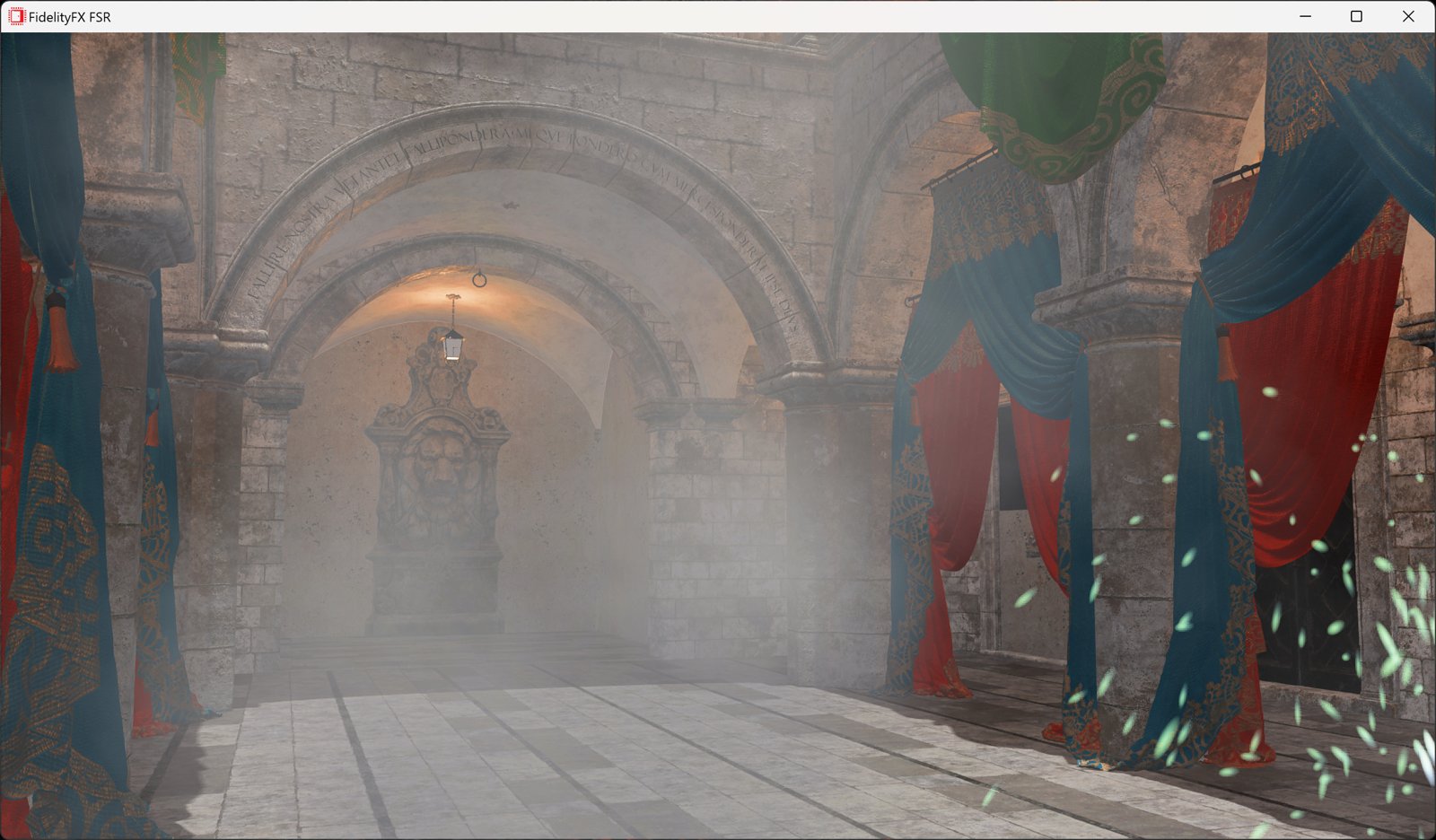
A cutting-edge upscaler that delivers significant image quality improvements over previous FSR generations. Our ML-powered upscaler (formerly AMD FidelityFX™ Super Resolution 4) uses neural networks to reconstruct visuals from lower-resolution frames that match or exceed native rendering quality, delivering a substantial boost in game performance.
Trained on high-quality game data using AMD Instinct™ GPUs, AMD FSR Upscaling leverages dedicated ML acceleration in AMD RDNA™ 4 architecture graphics cards for optimal performance. Backward compatibility is maintained through analytical upscaling paths AMD FSR 3 for RDNA 3.5 architecture and earlier hardware.
ML-powered AMD FSR Upscaling delivers:
- Reduced ghosting on moving objects.
- Improved preservation of particle effects.
- Superior detail and temporal stability.
AMD FSR Upscaling 4.1.0 update includes:
- Updated inference resulting in a sharper image.
- Additional work to improve ultra-performance & DRS modes.
AMD FSR Frame Generation
An advanced frame-generating solution that leverages state-of-the-art machine learning (ML) algorithms to generate high-quality intermediate frames from two consecutive source images, interpolating the motion of pixels between the start and end images. The neural approach significantly reduces artifacts common in analytical interpolation such as ghosting and motion discontinuities.
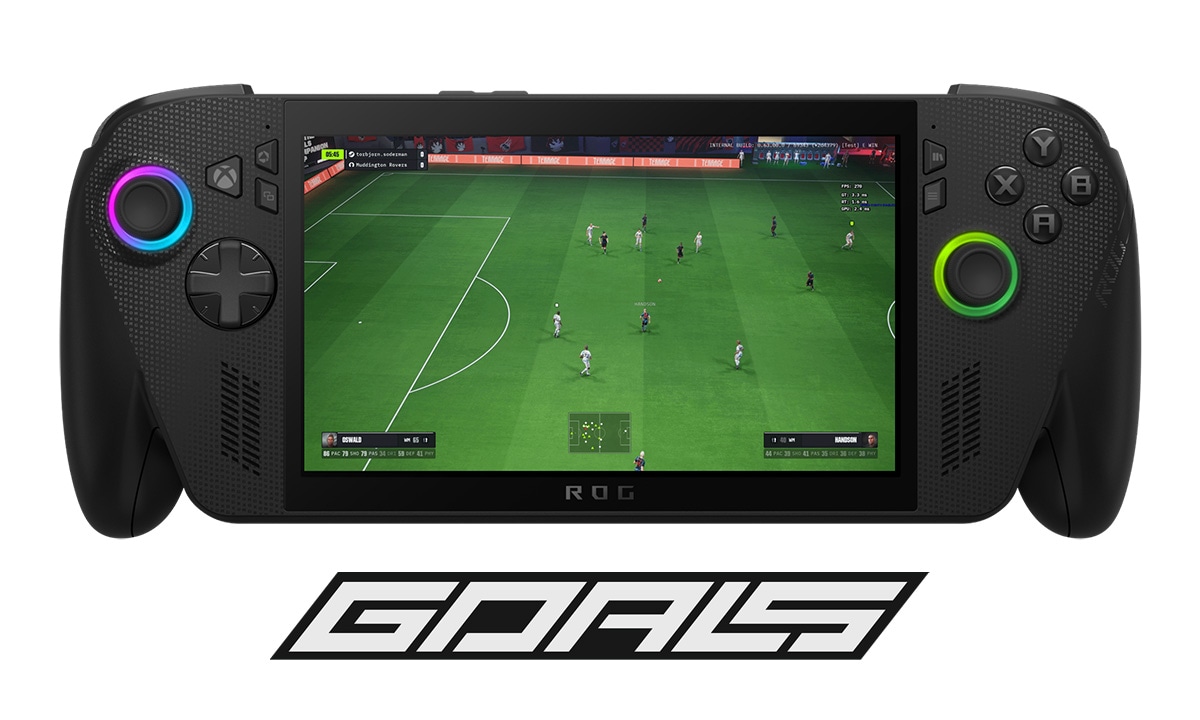
Combined with AMD FSR Upscaling and AMD Radeon™ Anti-Lag 2, AMD FSR Frame Generation delivers a higher visual frame rate for ultra-smooth and ultra-responsive gameplay on AMD RDNA 4 architecture graphics cards. An analytical version of FSR Frame Generation (previously AMD FSR 3) is also included for backward compatibility with RDNA 3.5 architecture and older GPUs.
AMD FSR Frame Generation 4.0.0 delivers:
- More accurate and higher-quality results using ML.
- Reduced artifacts compared to analytical interpolation.
AMD FSR Ray Regeneration
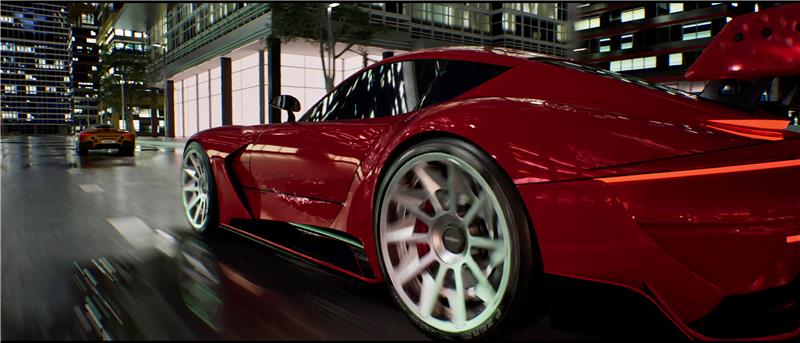
A standalone, machine learning-powered real-time denoiser that integrates with any game engine, enabling high-quality visuals by denoising inputs from ray-traced workloads.
Requiring AMD RDNA 4 architecture graphics, it works best when combined with other AMD FSR “Redstone” technologies to transforming noisy outputs from ray tracing into a clean, coherent image.
AMD FSR Ray Regeneration delivers:
- Superior results compared to analytical denoising using ML.
- Decoupled denoising independent of upscaling.
- Optimal results when paired with AMD FSR Upscaling.
AMD FSR Ray Regeneration 1.1.0 update includes:
- Quality and memory improvements.
- Addition of debug view modes.
AMD FSR Radiance Caching
A state-of-the-art illumination cache designed to work in tandem with Monte Carlo path tracing to boost rendering performance. At its core is an online machine learning model that continuously trains on complex, multi-bounce global illumination (GI) on-device and in real-time.
The result is richer, more immersive lighting environments that respond dynamically without the need for pre-computation or baking.
AMD FSR Radiance Caching 0.9.0 (technical preview) delivers:
- Efficient GI results with reduced computational costs.
- High-performance path tracing in games.
General overview
The AMD FSR SDK 2.2 includes an update to AMD FSR Upscaling 4.1.0 and an updated version of AMD FSR Ray Regeneration 1.1.0. Developers are free to support standalone effects or all of them together.
Use of pre-built, signed AMD FSR API DLLs is now required.
The AMD FSR SDK 2.2 requires developers interact with the FSR SDK using the amd_fidelityfx_loader.dll.
-
To use upscaling technologies, the amd_fidelityfx_upscaler.dll provides access to AMD FSR Upscaling 4.1.0 (alongside FidelityFX™ Super Resolution 2.3.4/3.1.5), and must be included alongside amd_fidelityfx_loader.dll in the title.
- Upscaling is optional and the
amd_fidelityfx_upscaler.dll can be omitted if upscaling is not used.
- FSR Upscaling 4 requires an AMD Radeon™ RX 9000 Series GPU or better and can only be used on appropriate hardware.
- When running on other hardware the AMD FSR API will automatically select AMD FidelityFX Super Resolution 3.1.5.
-
To use frame generation technologies, the amd_fidelityfx_framegeneration.dll provides access to AMD FSR Frame Generation 4.0.0, and must be included alongside amd_fidelityfx_loader.dll in the title.
- FSR Frame Generation is optional and the
amd_fidelityfx_framegeneration.dll can be omitted if frame generation is not used.
- FSR Frame Generation is also compatible with third-party upscalers, as long as render-resolution motion vectors and depth, in supported formats, is provided to the AMD FSR API.
-
To use ray regeneration technologies, the amd_fidelityfx_denoiser.dll provides access to AMD FSR Ray Regeneration 1.1.0, and must be included alongside amd_fidelityfx_loader.dll in the title.
- FSR Ray Regeneration is optional and the
amd_fidelityfx_denoiser.dll can be omitted if ray regeneration is not used.
-
To use radiance caching technologies, the amd_fidelityfx_radiancecache.dll provides access to AMD FSR Radiance Caching 0.9.0 (technical preview), and must be included alongside amd_fidelityfx_loader.dll in the title.
- FSR Radiance Caching is optional and the
amd_fidelityfx_radiancecache.dll can be omitted if radiance caching is not used.
Our existing AMD FidelityFX technologies
For all previous iterations of AMD FidelityFX techologies, please refer to the FidelityFX SDK 1.1.4.
While some of the technologies present in the AMD FidelityFX SDK 1.1.4 may receive updates in the future, it is important to understand that this will not apply to any FSR API based features (like AMD FSR 3.1.4). For all new API-based technologies, please refer to the AMD FSR SDK 2.0 and later.
Additional resources
Requirements
Supported GPUs
- AMD FSR Upscaling 4.1.0: AMD Radeon™ RX 9000 Series GPUs and above. Requires Shader Model 6.4 support.
- AMD FSR Frame Generation 4.0.0, FSR Ray Regeneration 1.1.0, FSR Radiance Caching 0.9.0 (technical preview): AMD Radeon RX 9000 Series GPUs and above. Requires Shader Model 6.6 support. †
- AMD FidelityFX Super Resolution 3.1.5, FidelityFX Super Resolution 2.3.4: AMD Radeon RX 500 Series GPUs and above (or equivalent from other GPU vendors). Requires Shader Model 6.2 support.
- AMD FidelityFX Frame Generation 3.1.6: AMD Radeon RX 5000 Series Graphics and above (or equivalent from other GPU vendors). Requires Shader Model 6.2 support.
† Shader Model 6.6 support requires DirectX 12 Agility SDK 1.4.9 or later.
Supported graphics APIs and Engines
Note: The AMD FSR Unreal Engine 5 plugin uses FSR Upscaling 4.0.3. It will be updated to v4.1 at a later date.
Supported OSs
Footnotes and disclaimers
Disclaimers/copyrights
DirectX and Windows are trademarks of the Microsoft group of companies.
Crimson Desert © 2025-2026 Pearl Abyss Corp. Crimson Desert is a trademark of Pearl Abyss. All rights reserved.
F1® 25 Game - an official product of the FIA FORMULA ONE WORLD CHAMPIONSHIP. © 2025 Electronic Arts Inc. EA SPORTS and Codemasters are trademarks of Electronic Arts Inc.
Horizon Forbidden West™ Complete Edition © 2024 Sony Interactive Entertainment Europe. Developed by Guerrilla. Horizon Forbidden West is a trademark of Sony Interactive Entertainment LLC.
Unreal® is a trademark or registered trademark of Epic Games, Inc. in the United States of America and elsewhere.
Warhammer 40,000: Darktide © Copyright Games Workshop Limited 2022. Darktide, the Darktide logo, GW, Games Workshop, Space Marine, 40K, Warhammer, Warhammer 40,000, 40,000, the ‘Aquila’ Double-headed Eagle logo, and all associated logos, illustrations, images, names, creatures, races, vehicles, locations, weapons, characters, and the distinctive likeness thereof, are either ® or TM, and/or © Games Workshop Limited, variably registered around the world, and used under licence. All rights reserved to their respective owners.