AMD Radeon™ Raytracing Analyzer
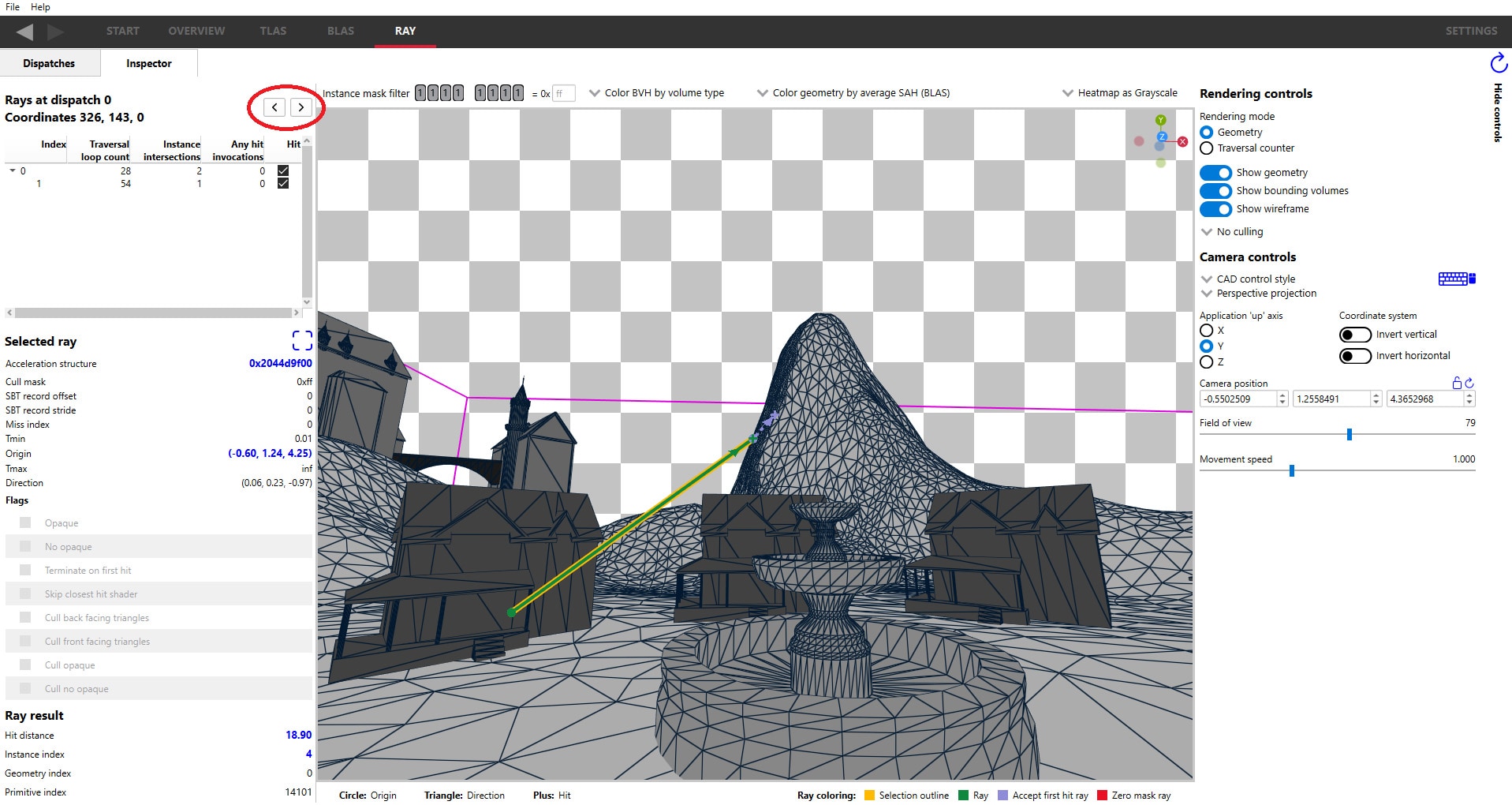
AMD Radeon™ Raytracing Analyzer (RRA) is a tool which allows you to investigate the performance of your raytracing applications and highlight potential bottlenecks.


Microsoft’s GDC sessions this year introduced new developments that are set to transform the Windows graphics ecosystem, and AMD is working closely with Microsoft® to help advance these innovations for developers. Each session focused on important topics, including the integration of ML into real-time graphics, the adoption of open compression standards, and the joint development of new developer tool features for Windows®.
It’s been an exciting year of development, setting the foundation for a strong and innovative future for developers and gamers. Close collaboration with partners like AMD enables us to bring new capabilities to the ecosystem faster and more effectively, and we’re looking forward to continuing this momentum together. – Bryan Langley - Partner Director of Product: Silicon, Graphics, Media, and AI at Microsoft
Through these collaborative efforts, improvements in performance, load times, and GPU debugging are being made, while providing developers with useful insights and hardware-specific optimizations. AMD looks forward to supporting these initiatives and is committed to ensuring compatibility with the latest Agility SDK 1.619 and 1.719-preview releases. This blog summarizes the highlights, covers our contributions, and outlines ongoing support for the latest features in the Windows graphics platform.

Microsoft announced at the DirectX State of the Union: DirectStorage and Beyond session a public developer preview of DirectStorage 1.4 and the initial release of the Game Asset Conditioning Library both of which introduce Zstandard compression as an option for game assets on Windows. This update provides game developers with an open standard that runs on CPUs and GPUs, and delivers improved compression ratios, faster load times, and smoother asset streaming for games.
Microsoft is also open sourcing its decompression shader on the DirectStorage GitHub and has developed the Game Asset Conditioning Library to further enhance compression ratios and throughput, allowing seamless integration into existing content pipelines. AMD is collaborating closely with Microsoft to optimize DirectStorage 1.4 with Zstandard decompression on AMD GPUs and CPUs, aiming to improve overall streaming performance.
We plan to release these optimizations for developers in a public driver during the second half of 2026 and you can learn more about DirectStorage 1.4 in Microsoft’s blog.
At the DirectX: Bringing Console-Level GPU Tools to Windows session, Microsoft announced a major advancement in bringing console-level GPU developer tools to Windows, highlighting the largest wave of new DirectX® tooling features to date. At the event, AMD joined Microsoft on stage alongside other hardware partners, showcasing our close collaboration throughout the feature development process and underscoring our significant contributions to making this release possible. The main new features announced were DirectX Dump Files, Live Shader Debugging, and Shader Explorer for PIX on Windows.
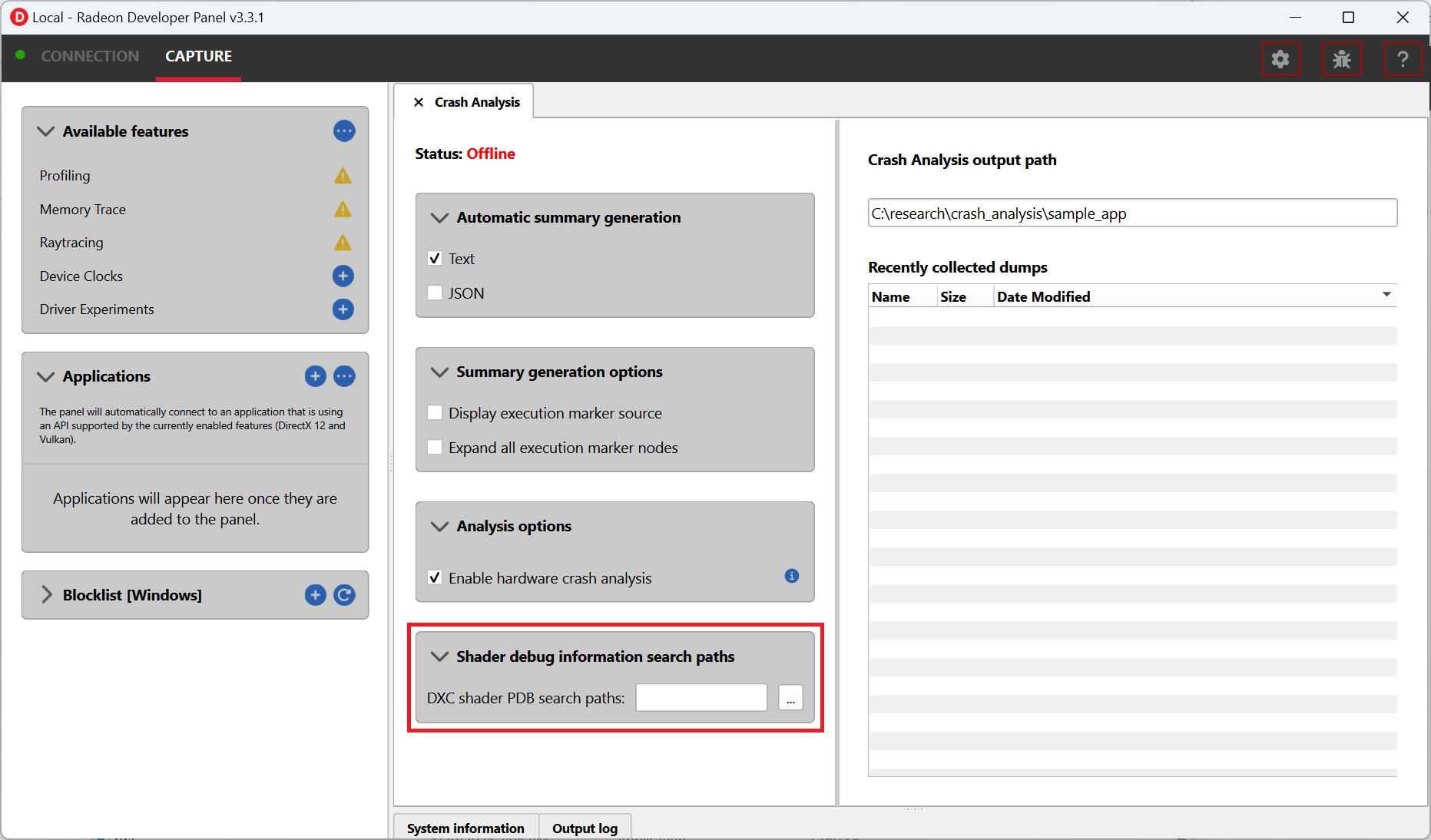
DirectX Dump Files streamline GPU crash diagnostics in Windows. When a TDR event occurs, comprehensive dump files are generated with detailed insights from hardware, drivers, Windows, and the affected application. PIX integration will make crash analysis and debugging more effective.
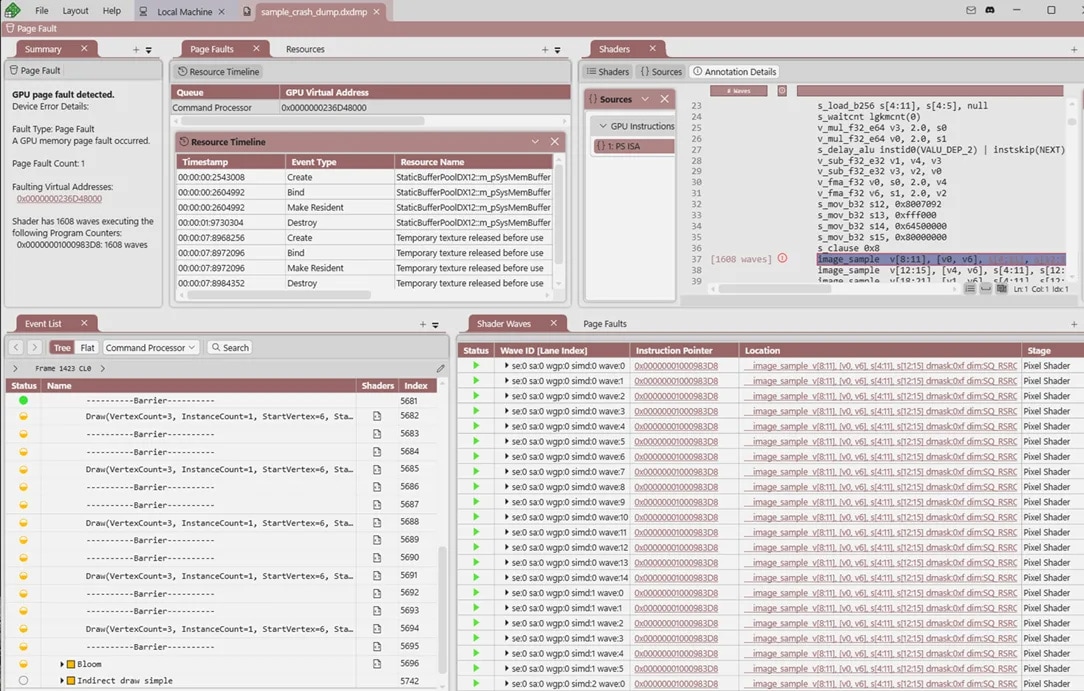
New D3D12 APIs allow developers to configure PIX event handling so events can be passed to the driver and included in DirectX Dump Files, enabling driver-level tools such as the AMD Radeon™ Developer Tool Suite (RDTS) to utilize PIX events for enhanced debugging and profiling.
Microsoft also previewed Live Shader Debugging, bringing real-time, on-chip shader debugging previously only available on Xbox to Windows. This effort involves close collaboration with hardware vendors including AMD.
In addition, Microsoft announced the first version of Shader Explorer for PIX on Windows, introducing a tool that together with PIX provides low-level compile-time performance insights for shaders alongside HLSL. AMD will support Shader Explorer from day one to bring hardware-specific optimization guidance directly into the PIX workflow.
AMD is expanding support for Microsoft’s PIX with two major integrations. First, we have enabled seamless interoperability between PIX and our AMD Radeon Raytracing Analyzer (RRA) tool, allowing developers to export Acceleration Structures from a PIX GPU Capture for in-depth analysis in RRA. This empowers users to diagnose raytracing performance issues, inspect BVH structures, and visualize memory usage and scene hotspots.
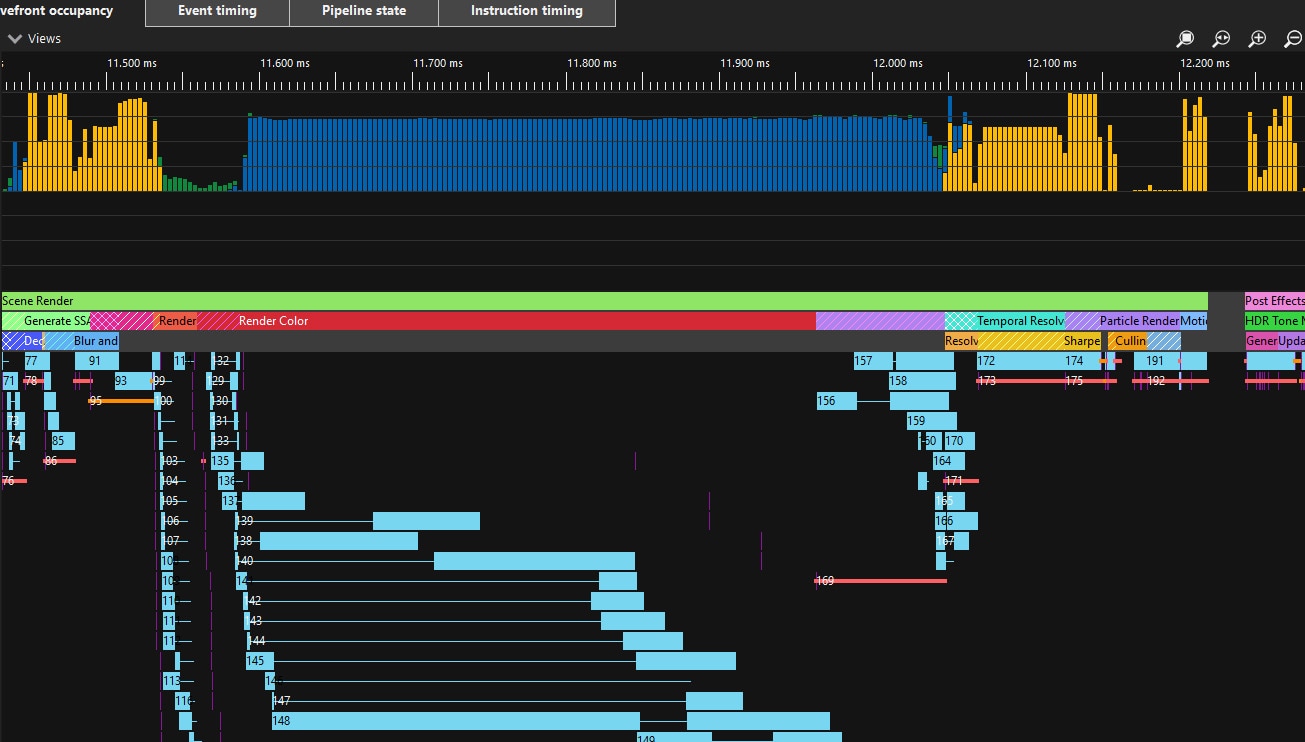
Second, we have improved our AMD Radeon GPU Profiler (RGP) tool by leveraging the new PIX Event Configurability APIs. PIX markers are now natively displayed in RGP without the need for special headers or recompilation, creating unified instrumentation across tools. This allows developers to efficiently locate performance regressions and analyze AMD hardware with comprehensive context using the same markers utilized in PIX.
Learn more about the tools and PIX updates in Microsoft’s blog, with availability of these news features starting in May 2026. The update to the Radeon Developer Tool Suite with initial support for these features will be available Q2 of 2026.
At the Evolving DirectX for the ML Era on Windows session, Microsoft announced that they are advancing DirectX to make machine learning a core part of real-time graphics on Windows. DirectX now supports both shader-level and model-level ML, ensuring that ML is integrated alongside traditional rendering workloads. Two key announcements from the session are DX Linear Algebra and the DirectX Compute Graph Compiler.
Last year, Microsoft introduced DirectX Shader Model 6.9’s Cooperative Vector feature, enabling hardware-accelerated vector–matrix operations in HLSL. While effective for shader-level ML, growing ML workloads like upscaling and denoising required matrix–matrix operations and shared data across threads that go beyond what vector–matrix can efficiently deliver.
Microsoft has now announced DirectX Linear Algebra, expanding math capabilities to include matrix–matrix operations and unified support for vector and matrix-based ML. This allows developers to write ML directly in HLSL with full control and scalability, with direct access to AMD WMMA cores from shaders on AMD Radeon graphics cards.
The new DirectX Compute Graph Compiler (CGC) alongside Windows MLIR addresses the growing complexity of compute kernels in shader-level machine learning. These kernels often differ across GPU architectures, making manual optimization impractical for developers targeting a wide range of PCs.
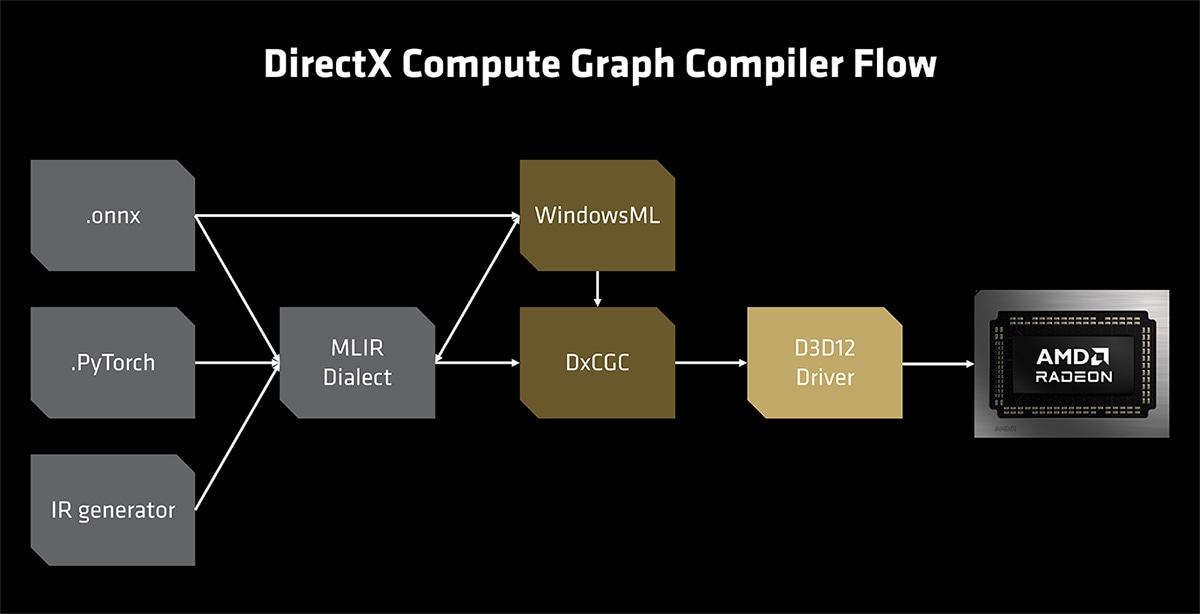
Microsoft and AMD have collaborated on the design of DirectX CGC, a new DirectX ML API that enables native GPU acceleration for full model execution. Complex ML models are brought into the DirectX pipeline and processed through MLIR Dialect, allowing DirectX and our AMD driver to optimize kernels, scheduling, and memory utilization for the underlying AMD GPU. On AMD, the runtimes transform these models for the targeted hardware and leverage the latest AMD kernel libraries to take full advantage of advanced AMD ML compute blocks.
DirectX CGC offers automatic graph optimization, memory planning, operator fusion, and unified performance tools, enabling seamless integration of both shader-level and model-level ML within DirectX.
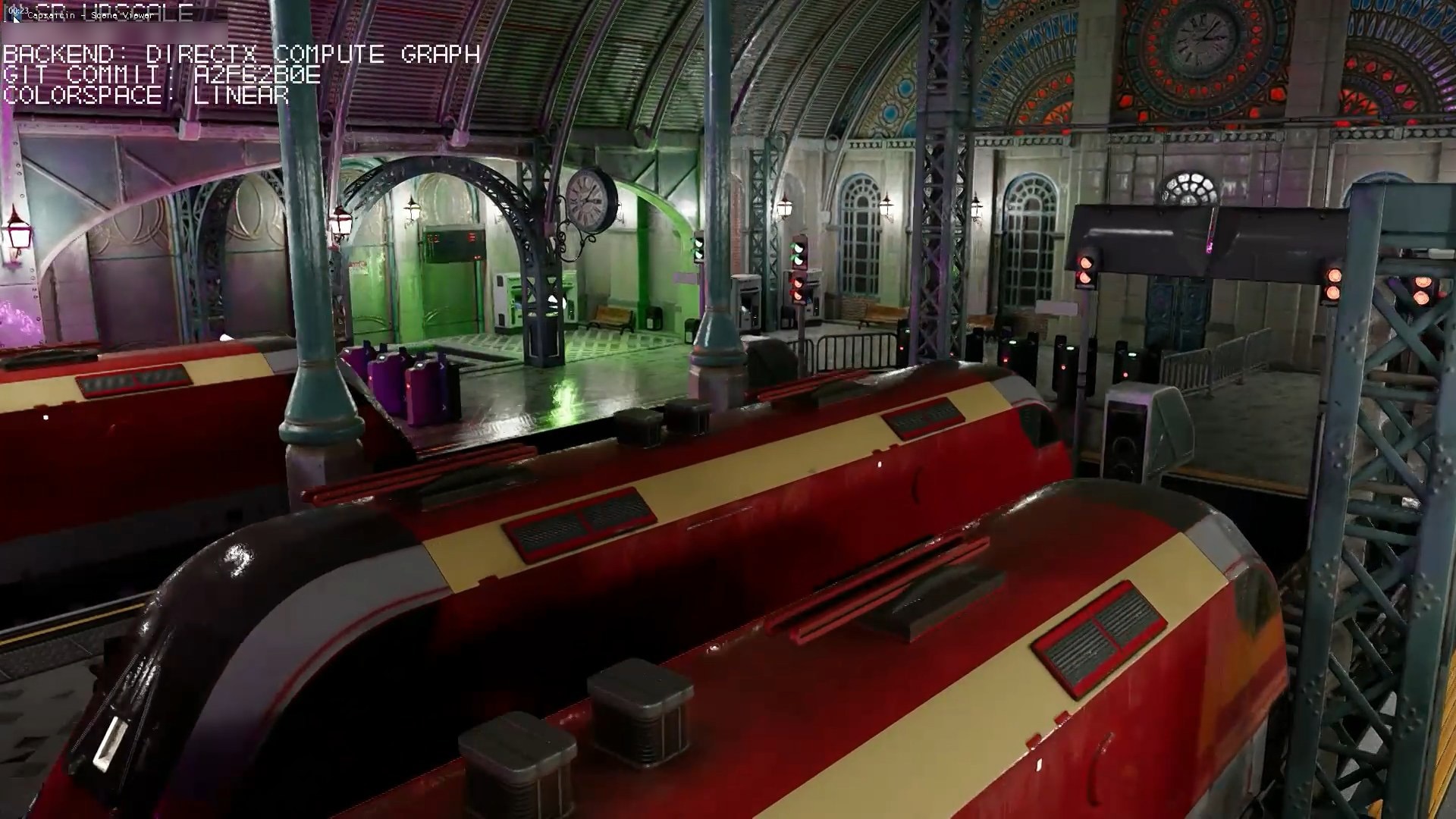
AMD joined Microsoft at this presentation to highlight our close collaboration on these key DirectX ML announcements and our planned support for them, showing FSR research demos of indirect lighting using DX Linear Algebra and ML upscaling running using the DirectX Compute Graph Compiler with AMD optimized drivers and ML layers.
DX Linear Algebra is set to enter public preview in April, and the DirectX CGC will be offered in a private preview this summer for interested developers who contact Microsoft. Stay tuned to GPUOpen for updates on AMD support for these new features. Learn more about how DirectX is evolving into a platform where ML is essential to graphics rendering in Microsoft’s blog.
First made available on the AMD Ryzen™ Z Series processor-powered Xbox ROG Ally and Ally X handheld gaming devices, Advanced Shader Delivery addresses longstanding issues of shader compilation times and in-game stutter by enabling gamers to download fully compiled shaders tailored for their hardware.
At the GDC Advanced Shader Delivery on Windows session, Microsoft announced that they are uniting the ecosystem pieces between game developers, IHVs, and game stores to solve shader compilation on PC going forward. New APIs have been released in the latest Agility SDK 1.619 release offering tools for tracing, compiling, and monitoring shader performance, and they’ve created partial graphics programs to efficiently manage large numbers of pipeline state objects.
Microsoft is working closely with AMD to expand these solutions across the PC ecosystem and is encouraging game developers to work with them to help solve shader compilation for their titles. You can learn more from the Advanced Shader Delivery Microsoft blog.
Along with all the announcements made at GDC, Microsoft recently announced that Shader Model 6.9 and additional features have been officially released with the latest Agility SDK 1.619 and the accompanying DXC 1.9.2602.16 update. Many of these capabilities had previously been available in preview since 2025. At the same time, Microsoft is also releasing several new preview features in a separate preview runtime: the Agility SDK 1.719-preview. Here is some more information about the updates in these releases and AMD support for them.
This update includes the following key features supported by AMD:
This preview includes the features in 1.619 in addition to these new preview D3D features supported by AMD:
For developers AMD support for the Agility SDK 1.619 and 1.719-preview releases are provide in our AMD Software: AgilitySDK Developer Preview Edition 25.30.21.01 driver.
Please see the table below for which AMD Radeon graphics cards support specific Agility SDK features.
| Agility SDK feature | AMD GPU support |
|---|---|
| Long Vector | AMD Radeon™ RX 9000 Series |
| 16 bit float Specials | AMD Radeon™ RX 9000 Series |
| Shader Execution Reordering (SER) | AMD Radeon™ RX 9000 Series (Limitation: “MaybeReorderThreads” does not move threads) |
| Revised Resource View Creation APIs | AMD Radeon™ RX 7000 and 9000 Series |
| Increased Dispatch Grid Limit | AMD Radeon™ RX 7000 and 9000 Series |
| CPU Timeline Query Resolves | AMD Radeon™ RX 7000 and 9000 Series |
| Fence Barriers (1.719-preview) | AMD Radeon™ RX 7000 and 9000 Series |
| VPblit 3DLUT (1.719-preview) | AMD Radeon™ RX 9000 Series |
You can learn more about the Agility SDK 1.619 and 1.719-preview release in Microsoft’s blog.
Microsoft’s GDC announcements bring powerful new tools and features to the Windows graphics platform, including advances in DirectStorage, updates to developer tools like PIX, and the deeper integration of ML into DirectX. AMD is working closely with Microsoft to support these innovations, helping developers access better performance, easier debugging, and new creative possibilities. Our commitment to support continues with our release of the AMD Software Developer Preview Edition driver for Agility SDK 1.619 and 1.719-preview, ensuring AMD hardware is ready for the latest Microsoft features for developers.
We encourage you to explore the linked Microsoft blogs above for more detailed information about all the announcements and to visit GPUOpen for the latest updates on AMD support. The partnership between AMD and Microsoft represents more than software technologies. It’s about empowering you, the developer community, with the tools and technologies needed to push the boundaries of what’s possible in game development and deliver incredible gaming experiences to millions of players on Windows.
Links to third-party sites are provided for convenience and unless explicitly stated, AMD is not responsible for the contents of such linked sites, and no endorsement is implied. GD-98
DirectX, Microsoft, and Windows are registered trademarks of Microsoft Corporation in the US and/or other countries.