AMD FSR SDK
AMD FSR™ SDK v2.4 is the launchpad for our ML-based FSR "Redstone" rendering technologies, inc. AMD FSR Upscaling, Frame Generation, Ray Regeneration, and Radiance Caching.

Plugin updated with AMD FSR™ Upscaling 4.1.2, adding AMD Radeon™ RX 6000 Series and select AMD Ryzen™ processor support.
The AMD FSR™ Unreal® Engine plugin has been updated to version 4.1.2, bringing the latest updates from the AMD FSR “Redstone” SDK 2.4 to Unreal Engine 5.3 up to 5.8. With this release, ML-based FSR Upscaling runs on a much wider range of AMD hardware, so more of your players can benefit from it on more of the devices they play on. And because the plugin integrates FSR through the AMD FSR API, games built with it can also receive newer FSR versions through AMD Software: Adrenalin Edition™ driver updates, without a game-side update for each release.
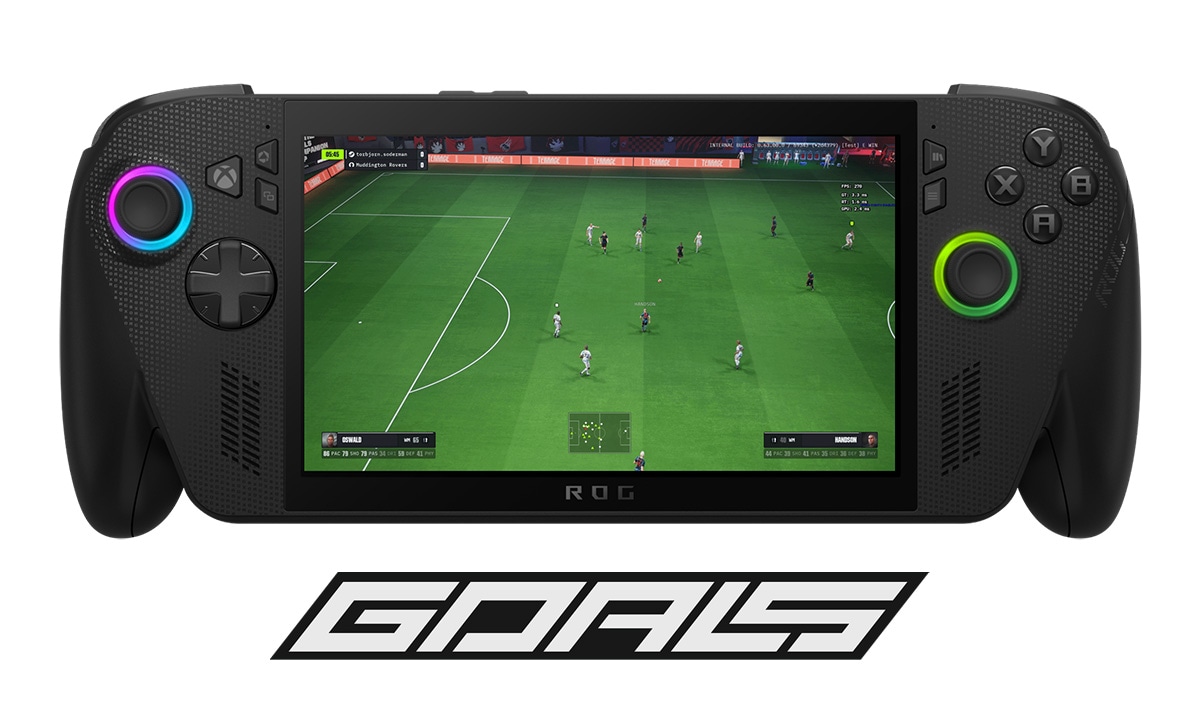
AMD FSR™ Upscaling is our ML-powered upscaler, delivering a substantial boost in game performance together with significant image quality improvements. In August, the plugin extended it to AMD Radeon™ RX 7000 Series GPUs. With version 4.1.2, it now also runs on AMD Radeon RX 6000 Series (AMD RDNA™ 2 architecture) discrete GPUs and, for the first time, on select AMD Ryzen™ processors with integrated Radeon graphics, found in gaming laptops, mini-PCs and handheld gaming devices.
FSR Upscaling 4.1.2 uses two INT8 models to cover this hardware. AMD Radeon RX 6000 Series GPUs and AMD Ryzen AI Max processors run the full model. A second, highly optimized model, less than half the size, is purpose-built for more constrained integrated graphics and brings ML-based upscaling to thin-and-light laptops and handhelds. Model selection is automatic and based on the target hardware. Results vary by game, resolution, quality mode and hardware.
For Unreal Engine developers, that means a single plugin integration brings ML-based upscaling to players on AMD Radeon RX 9000, RX 7000 and RX 6000 Series graphics cards and on supported AMD Ryzen-powered laptops and handhelds, with analytical AMD FSR 3 as the fallback on other hardware. See the plugin guide’s Requirements section for the full hardware list.
The plugin supports DirectX® 12. Vulkan® support, added to AMD FSR Upscaling and AMD FSR Frame Generation in the AMD FSR SDK 2.4, isn’t currently available in the plugin, so stay tuned to GPUOpen for future plugin updates.
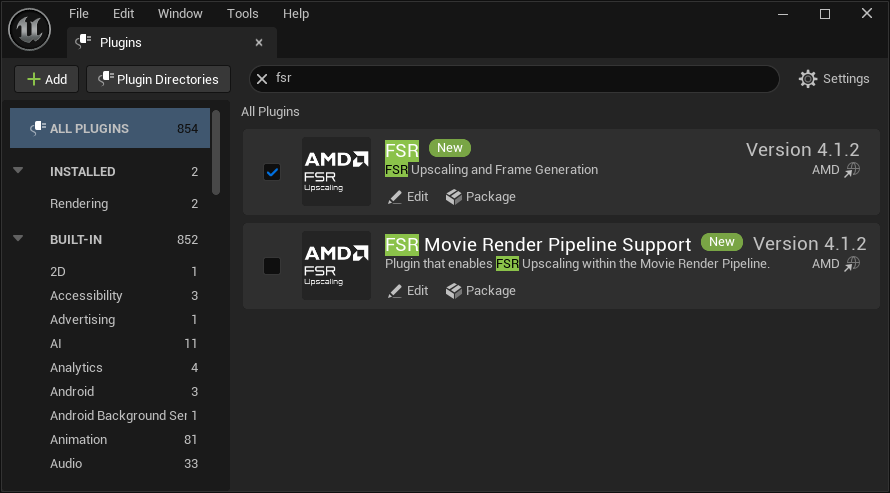
The plugin also includes AMD FSR™ Frame Generation 4.0.2 and the new FSR Frame Generation Swapchain 4.0.0, which adds Driver-Assisted Frame Pacing on AMD Radeon™ RX 9000 Series GPUs. On compatible hardware, final presentation timing is delegated to the AMD display driver, which schedules the present closer to the display pipeline for smoother frame delivery and lower CPU overhead.
Driver-Assisted Frame Pacing requires AMD Software: Adrenalin Edition™ 26.10.1 or later, and works with the plugin’s default OverrideSwapChainDX12 setting of true. AMD FSR Frame Generation 4.0.2 requires Windows® 11. See the AMD FSR Frame Generation page for the full list of requirements.
The AMD Radeon™ Anti-Lag 2 Unreal® Engine plugin has also been updated to version 2.0.6 with performance and stability improvements. It reduces end-to-end system latency in GPU-bound scenarios and integrates with the AMD FSR™ plugin to function correctly with FSR Frame Generation enabled. It can now also be downloaded directly from the AMD FSR Unreal Engine plugin guide.
DirectX and Windows are trademarks of the Microsoft group of companies.
Vulkan and the Vulkan logo are registered trademarks of the Khronos Group Inc.
Unreal® is a trademark or registered trademark of Epic Games, Inc. in the United States of America and elsewhere.